The Daily Gusketeer

Baja Trek's daily blog.

Showing posts with label environment. Show all posts

Thursday, October 21, 2010

The Gulf Between Us

The Gulf Between Us
 
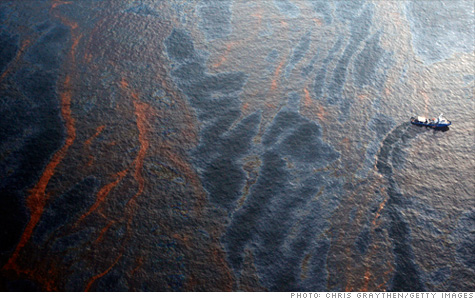
"The oil is not gone. This story is not over. We smelled it in the air. We felt it in the water. People along the Gulf Coast are getting sick and sicker. Marshes are burned. Oysters are scarce and shrimp are tainted. Jobs are gone and stress is high. What is now hidden will surface over time."


You should probably read this article, even though it's long, because: "To bear witness is not a passive act."

Another Veggie Oil-Powered Adventure Bus!

Their bus may not be as beautiful and glorious-looking as our Gus, but it's pretty cool nonetheless that the funky "prog-metal" band Mose Giganticus is currently touring around in a lean, mean, veggie oil-powered machine, just like us! And look, they even have a star on their door...

Read about it out here!

Do you like prog-metal?  I sure don't, but I kind of wish I did so that I could support their cause.  I'm passing the baton of responsibility in this matter on to you!

Friday, September 17, 2010

Protecting the Wild

It's infographic hour!

This infographic to the left compares all kinds of wilderness metrics in North America.

Mexico wins on the Ecological Footprint front, but loses on the Wildness front, surprisingly.

And that's something we've been concerned about over here at BT for years... We'd love to find a way to funnel some funds into supporting Protected Areas in Baja. We've got a few National Parks already, San Pedro Martir and Parque Constitucion being two you'll recognize if you've been on a few treks, and also some Marine protected areas, both in the Gulf of Californias and on the Pacific coast of Baja.

But that's not enough! Not for us. We know (and you've probably seen) some of the incredible wilderness areas that Baja has to offer, and we certainly think there needs to be more resources put towards protecting them. Don't you?

The map also highlights Mexico's water problems. Although we've got the smallest per capita consumption, we've also got the smallest availability and the least margin for error! That's why innovations like Cuatro Casas hostel's passive solar water distillation system count with every drop of water they help us save.

Anyway, check out the party responsible for this cool image, The Big Wild, which is based in and focused on Canada and has all kinds of fun ideas going on.

Next, check out this awesome new interactive map of Marine Protected Areas in North America, part of the North American Environmental Atlas. They also have this hilarious, soundtracked promotional video of their map. Look for Baja!

We can still eat tacos!

grazing calves at WareaWell, maybe.  Check out this article by George Monbiot, in which he boldly issues a retraction of his statement that veganism is the only ethical way to eat, due to the social (oh yes, it doesn't just affect the beasts) and animal justice issues that underlay our meat production systems. Monbiot goes on to review a new book by Simon Fairlie that serves as "an abattoir for misleading claims and dodgy figures, on both sides of the argument."

If you can excuse the awful, awful, and inappropriate slaughterhouse puns and get through to the meat of the article (Did I just say that?), you might clear up a few of your own misconceptions too. I certainly did!

Like, for example, you know how they always say it takes a huge amount of feed to produce a smaller amount of meat, to feed an even smaller amount of people? Comparatively, they say, eating the greens ourselves wastes a lot less energy and feeds more people.  Well, it turns out that's true only when talking about "concentrated feed", not about grass.  Actually, cows are terribly efficient at converting the energy in grass into edible energy for humans. Huh.

Also discussed is how pigs are excellent converters of grain waste and slop into food. Basically, in their natural eating habits, they turn things we can't eat into things we can.

Tons of other misconceptions are addressed, as well as some remaining ethical/environmental issues.

Overall, say Monbiot and Fairlie, the root problem isn't the very fact that we're raising animals for food, but the way we're raising them.  Feedlots and commercial slaughterhouses have got to go. But local production and low-energy and -waste farming could be an ethical way to go.

Here at Baja Trek we make most of our camp meals vegetarian. We also try to shop at our locally-owned grocery stores instead of the big commercial chains. When we eat seafood, we've usually bought it off a fisherman we know or dug it up (clams)/caught it ourselves. I'm interested to see if we can start chatting up our favorite taco stand-owners to see if they know where their meat comes from and under what conditions it's raised.

Perhaps it's time to get in touch with your sources of meat!

Friday, August 6, 2010

Another Kind of Veggie-Powered Bus

Hey! Check out this other cool retro-fit for a school bus: Richmond, Virginia's got their own "mobile micro farmers market on wheels," which motors around town taking farm-fresh produce from local farms to households in town. Pretty cool! The effort is called Farm to Family and also hosts a CSA program in addition to the market-on-wheels.

My favorite part is how they rebuilt the bus interior to hold baskets of yummy-looking veggies.

In their words: "Farm to Family is about building personal relationships within the community and bringing people together." Wait a minute! That kind of sounds like something we would say! And hey, doesn't this guy (to the left) even kind of look like Nico?! 

Perhaps we have some soul-mates over in Richmond...

Wednesday, June 16, 2010

Viva la Vaquita!

Though you may never have heard of them, the little white Vaquitas are one of the rarest and certainly the smallest of all whale species. And guess what? They're endemic to Baja's Gulf of California (that means this is their only habitat in the world)!

They live in the northern part of the Gulf, where the waters are warm and the small fish are plenty. They have always been a rare species, with a low population and rather elusive behavior, so much so that to this day, some Baja fishermen claim they're only legend! This, however, is quite untrue. They have been around for quite a while, and in fact are now in trouble due to overfishing in the Gulf, water pollution, and reduction of water flow in the Colorado River. They also occasionally get caught in fishermens' gill nets.

The last survey in 2008 put their numbers at just 250 individuals, which is hardly enough to maintain a stable population. It looks like the Vaquitas are once again on the decline...

There are a few organizations which are working to protect the Vaquitas, one of which is Sonora's Intercultural Center for the Study of Deserts and Oceans (CEDO), a non-profit research institute. We know these people personally and they're doing good work not just for the Vaquita, but also for the fisheries and ecosystems of the northern Gulf, from conducting coastal estuary conservation to working with cooperatives of fishermen to rotate their fishing grounds and manage the fisheries in a more holistic way. (You can visit CEDO in Puerto PeƱasco, Sonora, for a tour of their visitor center and to get more info about the local Gulf ecosystems!)

The Mexican government has also created a protected area where the highest concentration of Vaquitas is supposed to be, so that fishing is prohibited within this area.  You can also visit Viva Vaquita, a non-profit website dedicated to raising awareness about the Vaquita's situation!

Here's a sighting of the Vaquita from 2008:


An Encounter with Vaquita. from Chris Johnson on Vimeo.

Thursday, June 10, 2010

Article Roundup!

As much as we love turning off our computers and heading out into Baja's wildernesses, you have to admit that the Internet has some pretty interesting things to say, sometimes.  Here's a small roundup of a few items that have caught my interest lately!
  • Towards Sustainable Travel: Breaking the Flying Addiction
    • I totally sympathize with the author (Elisabeth Rosenthal) of this article! I do everything I can on a daily basis to make sure my Carbon footprint corresponds to the shoe-size of a newborn baby. And here at Gus Headquarters, we're always trying to think up new and old ways to keep our travel style Carbon neutral. But flying is one of the hardest habits to kick. How do you beat that kind of convenience? 
  • Tracking the Ancestry of Corn Back 9000 Years
    • Did you know that corn came from a Mexican grass called Teosinte? Apparently the early indigenous Mexicans were doing some pretty sophisticated breeding and domestication of the grass to get corn to the state it is today. 
  • Bryant Austen's Studio Cosmos
    • Okay, so this isn't technically an article, but check out these "high-resolution, life-size photographs of endangered whale species." Holy crap awesome. Make sure you read his "Bio" page. What a cool dude!
  • Dirt Makes Us Smarter
    • The article's a little dry, but the point comes through loud and clear: playing in dirt makes you happier, healthier, and even smarter! All right!   
  • Amazing Jellies
    • "As elegant as they are squishy." A cool educational video (in hd!) about jellies.
Happy reading!